Óðinsjakt – Wildflower Honey, Blackberries & Tarragon
Óðinsjakt is a wildflower mead that carries the spirit of the old gods in every sip—bold, fragrant, and unapologetically full of character. This semi‑sweet creation opens with a vibrant rush of blackberries, their deep purple richness unfolding across the palate with both brightness and depth. The wildflower honey base adds a soft golden warmth, giving the fruit a lush foundation and lending the mead its smooth, wine‑like body.
As the blackberry notes settle, tarragon rises—first subtle, then confidently present. Its herbal lift brings a distinctive twist, offering a gentle licorice‑like edge that feels both ancient and intriguing. This “thrust” of tarragon at the finish doesn’t overpower; instead, it sharpens the profile just enough to make each sip memorable, adding a spiced complexity that lingers pleasantly.
Óðinsjakt is ideal for drinkers who appreciate the refined feel of a classic wine but crave the depth, history, and honey‑driven soul of mead. It’s a bottle that invites slow enjoyment, conversation, and a touch of mythic reverence.
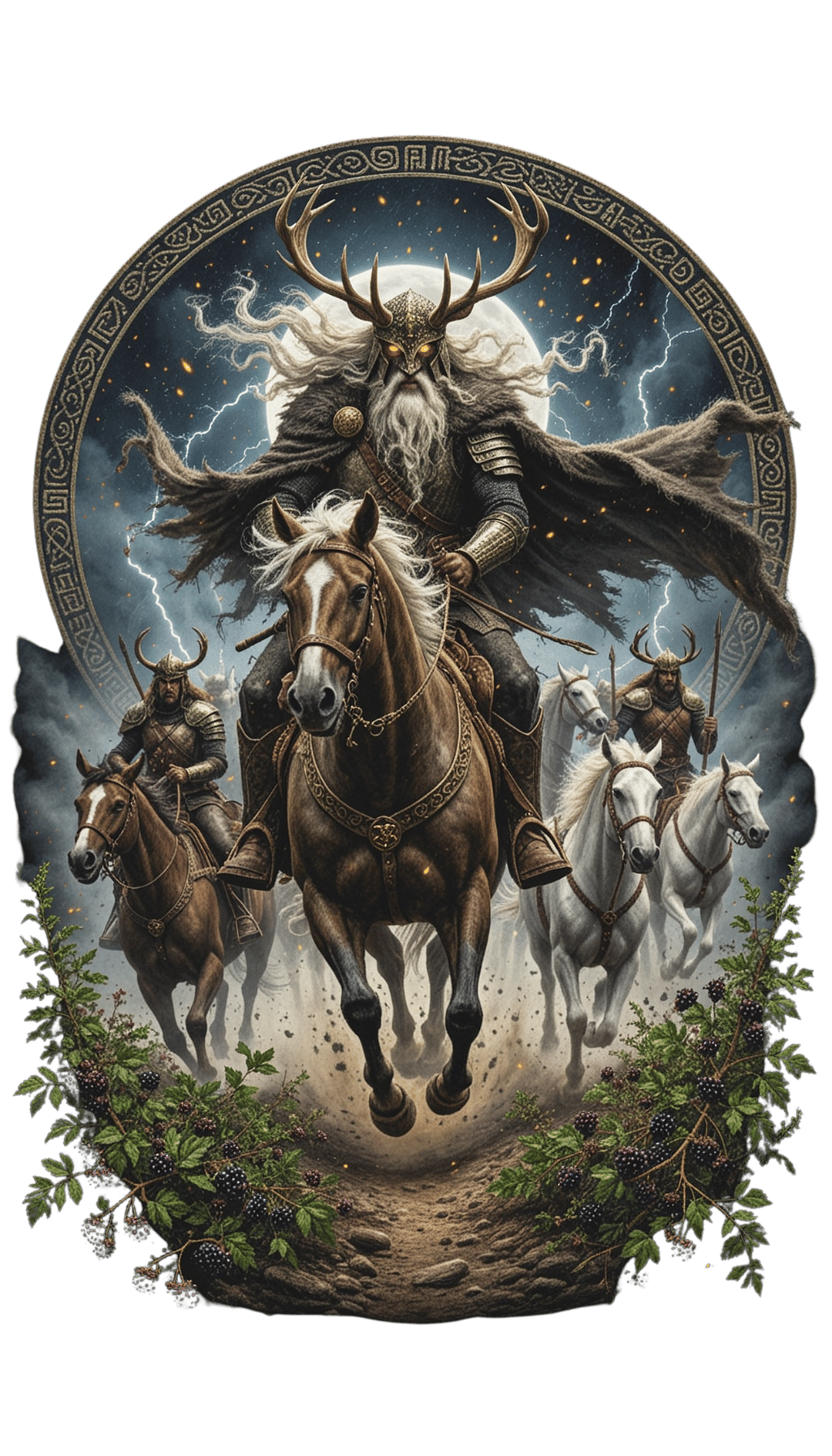
Óðinsjakt — “Odin’s Hunt” — refers to one of the most powerful and haunting mythic events in Norse and broader Germanic folklore: the Wild Hunt, a supernatural procession led by Odin himself. At its core, the Wild Hunt is a spectral cavalcade of riders, hounds, and spirits that tears across the winter sky or through storm‑darkened forests, often seen as an omen of upheaval, death, or great change.
What the Wild Hunt Was
Across Germanic and Norse traditions, the Wild Hunt is described as a ghostly chase led by a mythological figure — most commonly Odin, the All‑Father, riding his eight‑legged horse Sleipnir. He is accompanied by the dead, valkyries, elves, or other supernatural beings, all thundering through the night in a furious, otherworldly pursuit. Witnesses claimed to hear horns, hooves, and hounds with blazing eyes sweeping overhead.
Season & Significance
The Hunt was believed to occur during winter, especially around Yule, when the veil between worlds was thinnest. Odin’s wild ride symbolized both terror and blessing:
-
A harbinger of death or misfortune for those who saw it.
-
A sign of Odin’s power, moving between realms.
-
A mythic force of nature, tied to storms, winds, and the restless dead.
Variations Across Regions
While Odin is the most famous leader, different cultures attributed the Hunt to other figures — Wotan, Gwyn ap Nudd, Herne the Hunter, or even biblical characters like Cain or the Devil. The core motif remained the same: a supernatural host racing through the night, unstoppable and awe‑inspiring.
The Story’s Essence
The Wild Hunt is ultimately a myth about power, transition, and the boundary between life and death. It evokes the raw, untamed force of winter storms and the presence of gods and spirits moving through the mortal world. To hear or see the Hunt was to glimpse something beyond human understanding — a reminder that the old gods still roamed the night sky.