
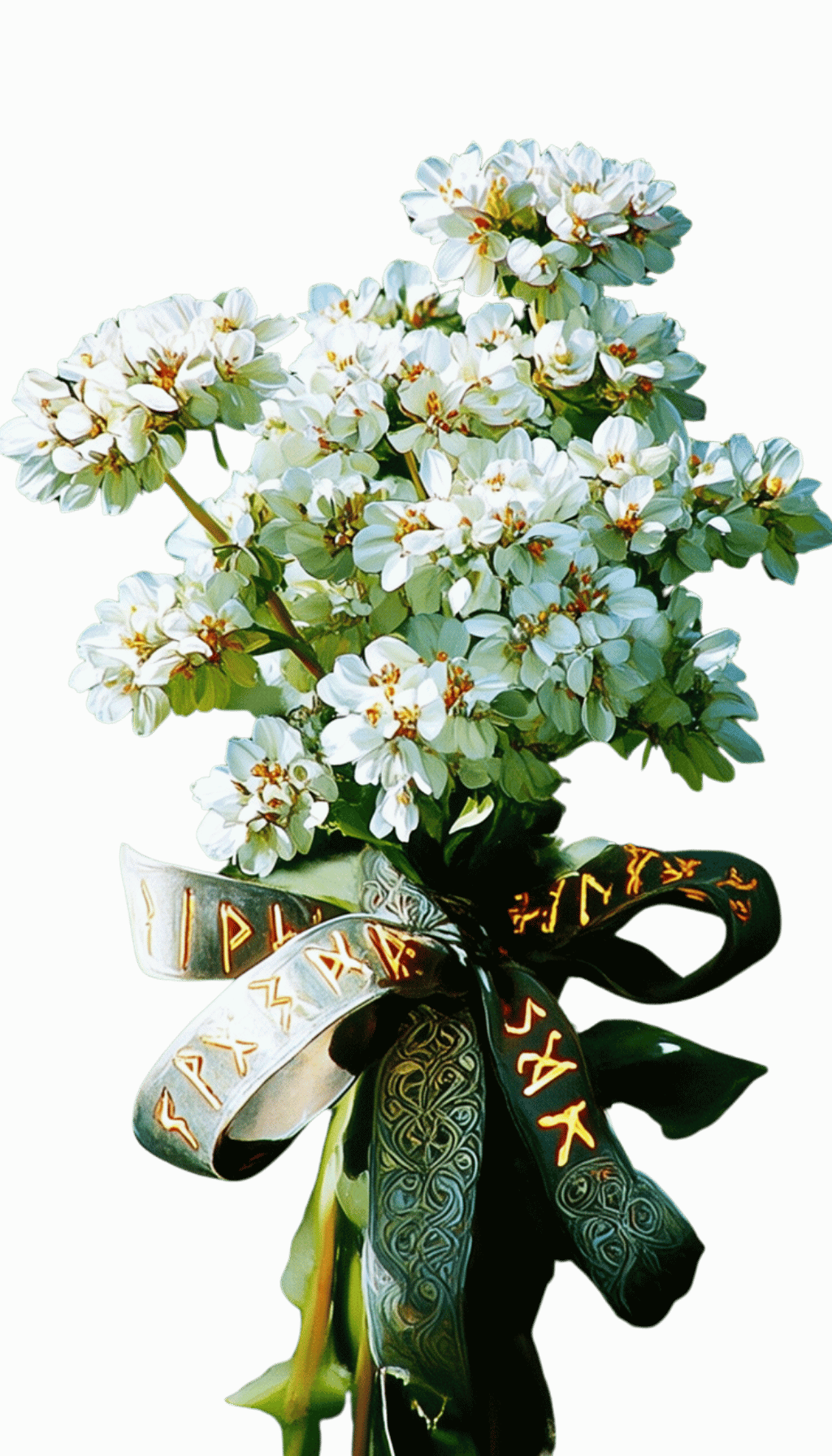
Buckwheat Blossom Traditional Mead
Crafted from pure buckwheat blossom honey, this traditional mead showcases the bold, unmistakable character that makes buckwheat honey so distinctive. Deep amber in color, it opens with rich aromas of honeycomb, molasses, toasted bread, dried fruit, and roasted nuts.
On the palate, layers of dark honey, caramel, toffee, and raisins are complemented by the honey’s signature earthy richness. Its natural sweetness is balanced by remarkable depth and complexity, creating a smooth, full-bodied drinking experience. At 12% ABV, a gentle warmth enhances the flavor without overshadowing the honey’s character.
The finish is long and satisfying, lingering with notes of dark honey, caramelized sweetness, and the robust essence of buckwheat blossoms. Bold, rich, and authentic, this mead is a true celebration of one of nature’s most unique honeys.
Buckwheat: The Plant
Despite its name, buckwheat is not a type of wheat and is not a true cereal grain. It is a flowering broadleaf plant (Fagopyrum esculentum) related to rhubarb and sorrel. Originally cultivated in Asia thousands of years ago, buckwheat is now grown throughout Europe and North America.
Buckwheat is prized for its ability to thrive in poor soils and short growing seasons. Farmers often use it as a cover crop because it grows quickly, suppresses weeds, and attracts a wide variety of pollinators. During bloom, fields become covered with clusters of delicate white flowers that are highly attractive to honeybees.
Buckwheat Honey
Buckwheat honey is one of the most distinctive and recognizable varietal honeys in the world. Unlike clover or wildflower honey, which tend to be light and delicate, buckwheat honey is dark, robust, and intensely flavorful.
Its color ranges from deep amber to nearly black, often with reddish or mahogany highlights. The aroma is powerful and unmistakable, featuring notes of molasses, malt, toasted grain, warm bread crust, earth, and dark dried fruits.
The flavor is equally bold. Buckwheat honey is rich and complex, offering layers of:
- Dark caramel
- Molasses
- Toffee
- Raisins and figs
- Malted grain
- Toasted bread
- Roasted nuts
- Light cocoa notes
- Earthy, almost smoky undertones
Many honey enthusiasts compare buckwheat honey to stout beer, dark rum, or maple syrup because of its depth and richness. Its strong character makes it polarizing; some people love its robust, earthy profile, while others accustomed to lighter honeys find it surprisingly intense.
Common Uses for Buckwheat Honey
Because of its bold flavor, buckwheat honey is often used where its unique character can shine:
Culinary Uses
- Drizzled over aged cheeses
- Added to artisan breads
- Used in barbecue sauces and glazes
- Sweetening dark teas and coffee
- Paired with roasted nuts
- Used in gingerbread and spice cakes
Mead Making
Buckwheat honey is highly prized among mead makers for producing rich, full-bodied meads with exceptional complexity. Rather than creating a light floral mead, it contributes deep honey flavors, earthy notes, and a long, warming finish. Buckwheat traditional meads are often described as robust, rustic, and intensely honey-forward.
Traditional Uses
Buckwheat honey has long been valued as a table honey and folk remedy due to its strong flavor and naturally high antioxidant content. Its dark color and robust taste have made it a favorite in many traditional European and North American cuisines.
Why Buckwheat Honey Makes Such a Unique Mead
When fermented into mead, buckwheat honey retains much of its distinctive personality. The resulting mead often displays aromas of honeycomb, molasses, toasted bread, and dark fruit, with flavors of caramel, toffee, raisins, and earthy honey. Unlike lighter meads that emphasize floral sweetness, buckwheat meads are known for their richness, complexity, and bold character.
For mead drinkers seeking something beyond the ordinary, buckwheat blossom mead offers a true expression of terroir and honey varietal character: dark, sweet, earthy, and unforgettable.