Thor – Quadruple Oaked Cyser
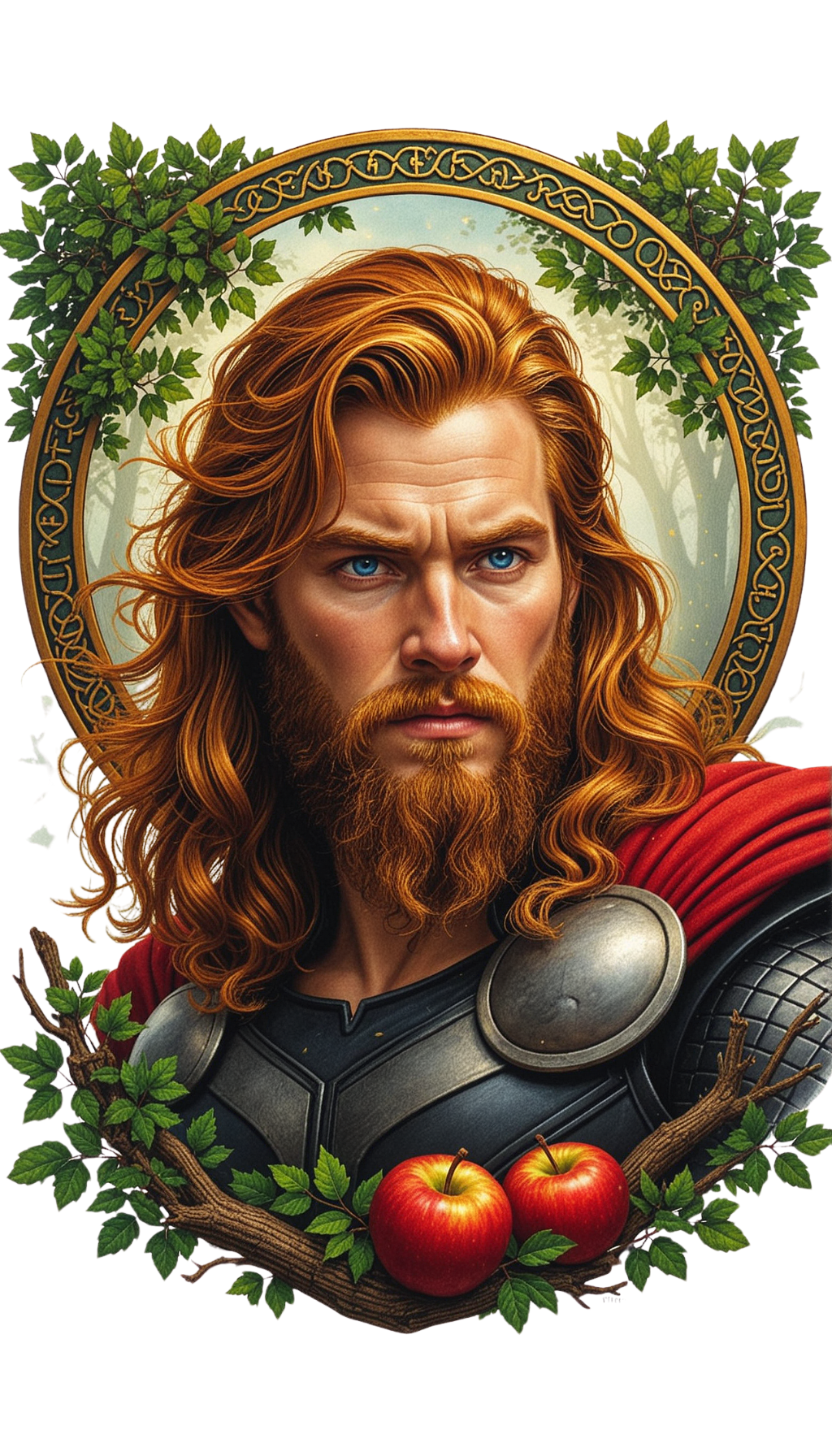
Thor strikes the palate like a storm given form — a cyser shaped by honey, apple, and oak into something worthy of a god. It begins with the warm glow of wildflower honey, sweet and golden as dawn over Asgard. Then comes the crack of cider‑apple lightning, a sharp tang that cuts through the sweetness with the force of a thrown hammer. As the thunder fades, a whisper of apple‑peel bitterness rises — subtle, grounding, the echo of orchards and earth.
But it is the four oaks that give Thor its true power. American oak brings strength and vanilla warmth; French oak adds refined spice; Hungarian oak deepens the storm with dark, earthy resonance; and Amburana oak weaves in its exotic, rune‑like sweetness, a final enchantment lingering long after the sip.
Thor – His Persona, Presence, and Place in the Norse Pantheon
Thor stands as one of the most beloved and enduring figures in Norse mythology—a god of thunder, strength, and protection whose presence resonates across the Nine Realms. Unlike many deities who dwell in lofty abstraction, Thor is a god of the people: direct, honest, fiercely loyal, and deeply tied to the everyday lives of those who once called upon him.
A God of Strength and Storms
Thor’s power is elemental. He commands thunder and lightning, rides the storm winds, and wields Mjölnir, the hammer whose crackling force could shatter mountains and drive back giants. His strength is legendary—not just physical might, but a force of will, a steadfastness that never wavers. Where other gods scheme or negotiate, Thor acts. He is decisive, bold, and unafraid to meet any threat head‑on.
Protector of Midgard
What sets Thor apart is his devotion to Midgard, the realm of humans. He is not a distant or aloof deity; he is a guardian who walks among the people, defends their lands, and takes genuine joy in their company. Tales describe him sharing meals, drinking mead in great halls, and laughing with the same hearty warmth he brings to battle. His fondness for humankind is sincere, rooted in admiration for their resilience and spirit.
This protective nature made him one of the most widely worshipped gods in the Norse world. Farmers, warriors, sailors, and families alike called upon Thor for safety, good harvests, fair weather, and strength in adversity. To them, he was not just a thunder god—he was a steadfast friend.
A Bridge Between Realms
Thor’s journeys often take him beyond Asgard, into the wild and dangerous lands where giants roam. These adventures are more than heroic tales; they symbolize his role as a boundary‑keeper, the one who stands between chaos and order. Every clash with a giant, every storm he commands, reinforces the fragile balance that keeps Midgard safe.
Importance in the Pantheon
Within the Norse pantheon, Thor is a pillar of stability. While Odin seeks wisdom and Freyja guides fate and fertility, Thor ensures the world remains intact long enough for those forces to matter. He is the defender of Asgard, the champion of Midgard, and the eternal foe of the giants who threaten cosmic order.
His role is not philosophical—it is practical, physical, and immediate. Without Thor, the realms would fall to chaos. With him, they endure.
A God of the People
Perhaps the most defining aspect of Thor’s legacy is how deeply he was loved. His temples were widespread, his hammer symbol worn for protection, and his stories told around countless fires. He represented strength, yes—but also reliability, courage, and the comforting knowledge that someone mighty stood watch over the world.
To the people of Midgard, Thor was not just a god. He was a guardian, a companion, and a friend.