
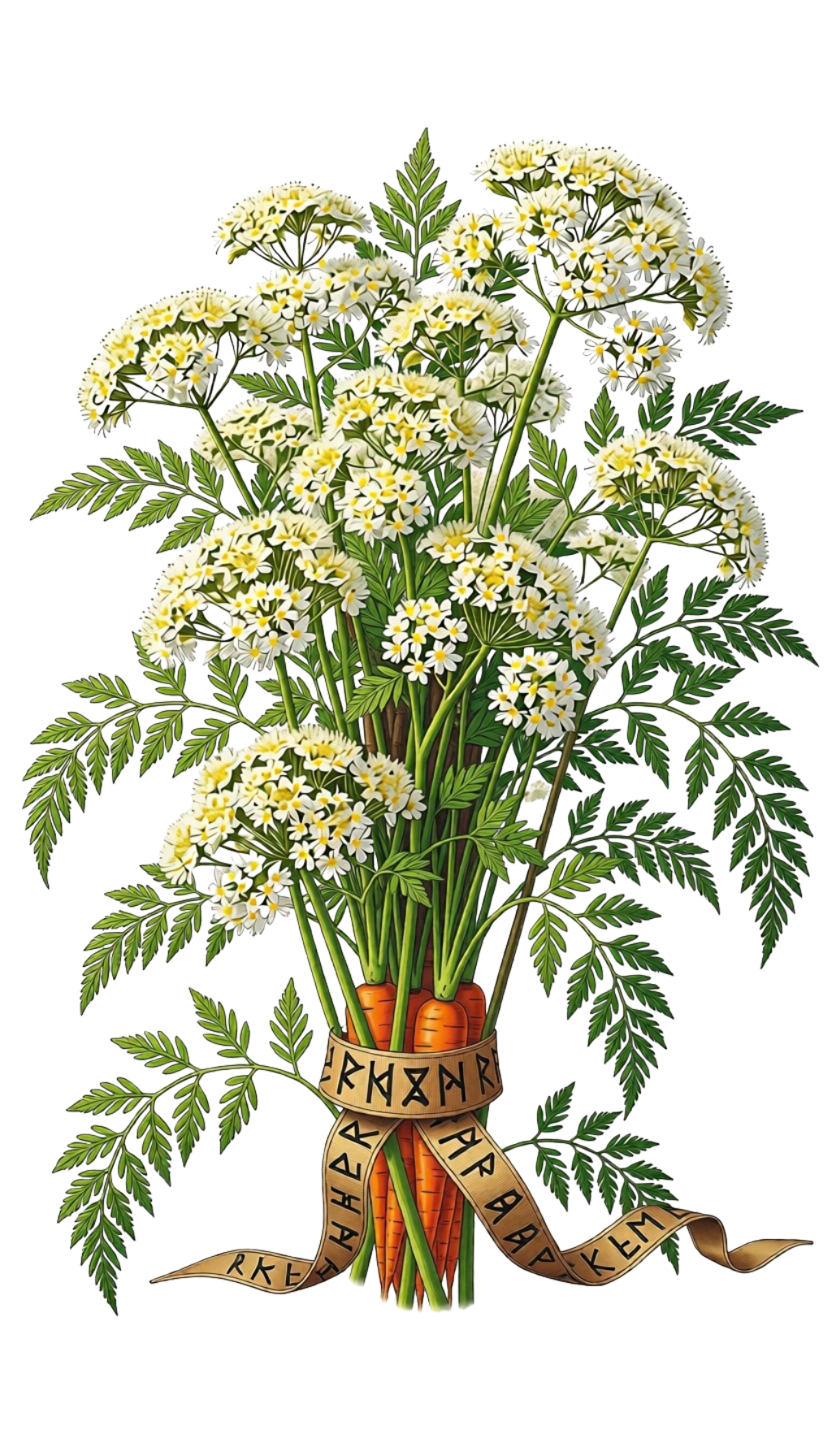
Carrot Blossom Traditional
Carrot Blossom Traditional is a sweet, richly textured mead crafted entirely from pure carrot blossom honey—a rare varietal gathered when bees forage the delicate white umbels of flowering carrot fields. This honey is naturally deep, earthy, and slightly rustic, carrying the warm essence of the soil it springs from.
Fermented with care, it becomes a mead with layered sweetness, gentle floral tones, and an unmistakable grounding character. Those who linger with the glass may catch a subtle echo of real carrot, not overt but quietly present, adding intrigue to each sip. It’s a celebration of an uncommon honey, transformed into a mead that feels both ancient and beautifully unexpected.
How Carrot Blossom Honey Is Produced
Carrot blossom honey begins in Oregon’s seed‑carrot fields, where farmers allow carrot plants to fully flower rather than harvesting the roots. When the plants reach bloom, they form delicate white umbels—broad, lacy clusters that are highly attractive to bees. Beekeepers bring hives directly into these fields during peak bloom, giving the bees exclusive access to carrot nectar.
Because carrot blossoms are small and somewhat finicky, the nectar flow is modest, making this honey naturally rare. Bees gather the nectar, concentrate it within the hive, and fan it until its moisture content drops to a stable level. Once capped, beekeepers harvest the frames, extract the honey, and filter it lightly to preserve its natural character. The result is a deeply distinctive varietal honey tied closely to Oregon’s agricultural landscape.
What Carrot Blossom Honey Tastes Like
Carrot blossom honey is unlike the bright, floral honeys most people know. It’s earthy, warm, and richly aromatic, with a depth that hints at the soil and sun of the fields where it’s produced. The sweetness is bold but not cloying, carrying notes of dried herbs, warm earth, and rustic florals. Some tasters notice a faint vegetal whisper—an echo of carrot tops or fresh‑pulled roots—though it’s subtle rather than literal. The overall impression is complex, grounding, and wonderfully suited for meadmaking, where its character translates into a layered, expressive fermentation.