
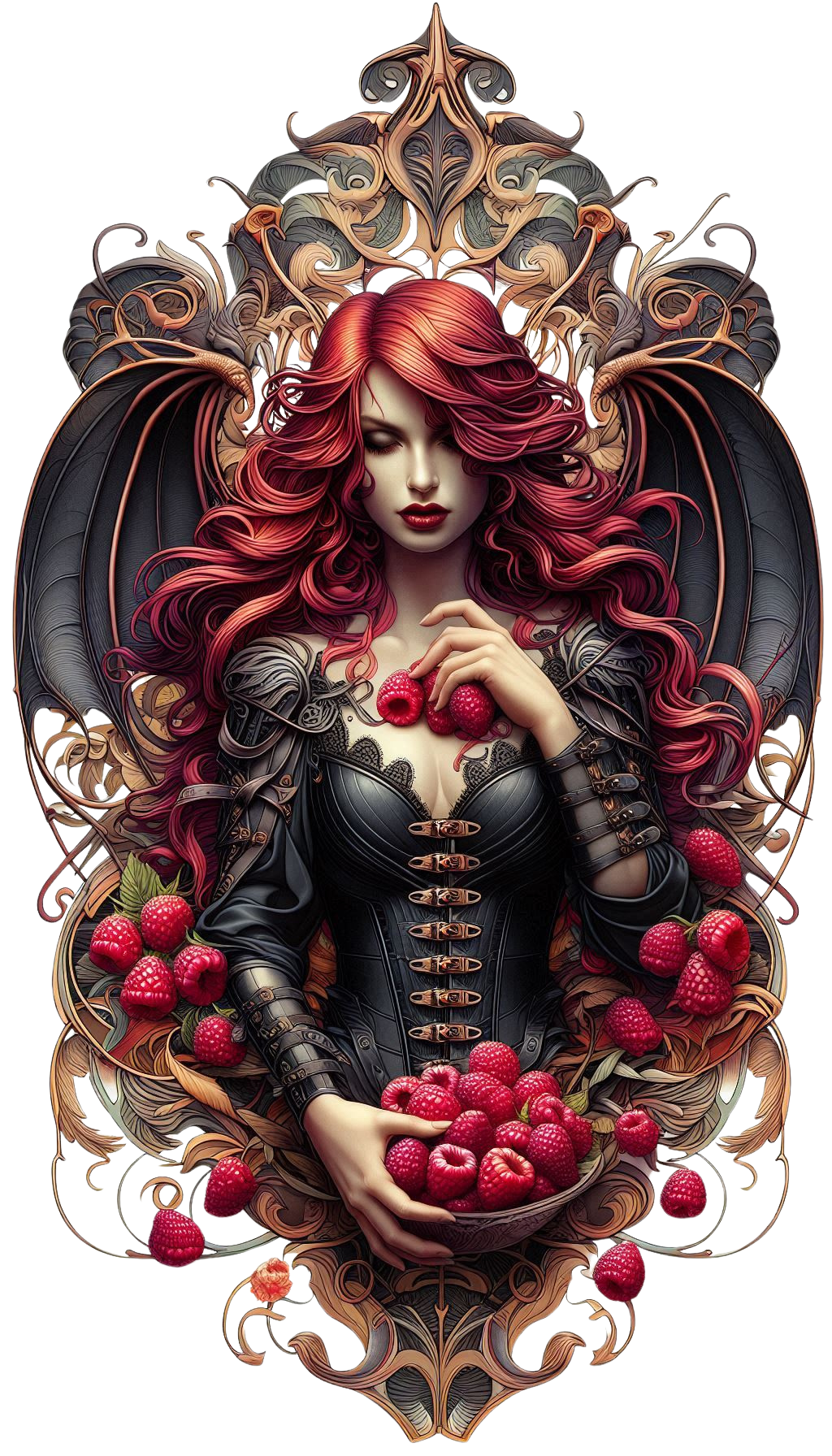
Succubus – Raspberry Zinfandel
mead that beckons… and then claims you.
Born of wildflower honey, crimson raspberries, and the dark, velvety pulse of Zinfandel grapes, Succubus is a temptress in a bottle—sweet at first kiss, tart at the bite, and utterly irresistible once she has her claws in you.
Her aroma rises like a whispered invitation: ripe berries, warm honey, and a faint wine‑soaked heat that hints at mischief. On the tongue, she is bold and ruby‑bright—a rush of raspberry overtone, lush and vivid, wrapped in the silken depth of Zinfandel. The sweetness lures you closer; the tartness keeps you wanting more. Every sip is a slow surrender.
In the old tales, a succubus steals breath, dreams, and reason. This one steals restraint. She is the embodiment of indulgence—a decadent, fruit‑driven enchantment that leaves a lingering warmth and a wicked desire to return to the glass again and again.
Drink if you dare. But know this: no one escapes her twice.
The Succubus — Origins, Myth, and Meaning
A succubus is a supernatural being found across centuries of folklore, typically depicted as a seductive female demon who preys upon human desire. Her power lies not in brute force but in allure—she entrances, tempts, and drains vitality through intimacy, dreams, or enchantment. Where other monsters strike with fang or claw, the succubus conquers through charm, beauty, and irresistible persuasion.
Origins in Medieval and Abrahamic Lore
The word succubus comes from the Latin succubare, meaning “to lie beneath,” a reference to her nocturnal visitations. She appears prominently in medieval European demonology, where theologians described her as a night‑wandering temptress who siphoned life force from sleeping men. These stories often served as moral warnings about lust, temptation, and the dangers of straying from spiritual discipline.
Connections to Earlier Mesopotamian Myth
Long before medieval Europe, the concept of a seductive, draining spirit existed in ancient Mesopotamia. Figures like Lilitu and Lamashtu—female night demons associated with storms, desire, and danger—share thematic roots with the later succubus. Lilitu in particular evolved into the Jewish folklore figure Lilith, sometimes portrayed as a demoness who seduces or harms men in the night. Though not identical to the medieval succubus, these earlier beings helped shape the archetype.
Renaissance and Occult Interpretations
By the Renaissance, occult texts expanded the succubus myth, describing her as a shapeshifter capable of appearing as a breathtakingly beautiful woman. She was said to use glamour, illusion, and intoxicating charm to ensnare her victims. Some grimoires even suggested she could steal dreams, manipulate emotions, or drain spiritual energy—an embodiment of temptation with a hidden cost.
Symbolism Across Cultures
While the succubus is most strongly tied to Western demonology, similar figures appear worldwide:
- Greek sirens who lure sailors to ruin with irresistible song
- Japanese yōkai like the jorōgumo, a spider‑woman who seduces before devouring
- Celtic leanan sídhe, a fairy lover who inspires creativity while draining life
Across cultures, the theme remains: a being who offers pleasure, inspiration, or beauty, but at a price.